Recovering from Birth Trauma: How to choose a trauma therapist for new moms in Los Angeles, California

Online Birth Trauma Therapy in Pasadena, California
If you’re reading this, you’re likely struggling with the unexpected, more difficult parts of fertility journey, pregnancy and postpartum. Your picture of what it would be like to have a baby is so different than the realities you’re having to face. You may be feeling disconnected from others, on edge after a crisis, or overwhelmed by your experiences of pregnancy, losses or the postpartum period.
The reality of building a family is that while there is love and joy, there may also be unexpected problems, things that you could never have prepared for. It’s not uncommon to struggle emotionally before, during or after pregnancy, with up to 1 in 5 moms suffering from postpartum depression and 1 in 3 who experience some aspect of childbirth as traumatic. What is all too common is how difficult it is to talk openly and honestly about all of your experiences, especially the painful, darker, harder parts of what you’re going through.
This is where birth trauma therapy can make a real difference.
Questions to ask when you’re looking for a therapist
Do they have experience working with your issues? You need to know that your therapist has a deep understanding of the problems you want help with.
How would they approach working with your specific issues? This includes what therapy modalities they use (for example EMDR for treating trauma, cognitive behavioral therapy for managing worry and anxiety). Ask them to describe their approach and ask them about their understanding of your needs. For example, “Tell me about your work with postpartum depression?” “How would we begin therapy?”
Are they experienced and informed in working with people who identify as LGBTQIA? BIPOC?
What are their training and education credentials?
How long have they been practicing?
Pay attention to how your questions are handled. You want your therapist to have a deep understanding of the issues bringing you to therapy but is the relationship that you’ll build with your therapist is just as important. There are many qualities that make a good therapist, including warmth, compassion and good listening skills. You may also need to talk to someone with a sense of humor, who inspires hope, helps you lean into your strengths and personal values, and talks to you about setting realistic therapy goals. Most therapists know that you'll need to talk to several different people when you're looking into therapy. It’s part of the process. Your questions are important and need to be answered in a way that makes sense to you.
Things to think about when you’re considering therapy
Why are you seeking therapy? What's happening right now that you need help with?
What kind of changes do want to make? Imagine what you want to notice after working with a therapist for 3 months, 6 months, a year?
What do you expect from your therapist?
If you've been in therapy before, what was helpful and what wasn't?
Common Reasons New Moms Seek Therapy for Birth Trauma
There is no one “right” reason or time to begin birth trauma therapy. If trauma-recent or past- is making the family building stage of life difficult, specialized trauma therapy can help. Common therapist goals and themes that I often hear in my practice include:
To enter a new pregnancy with more confidence and optimism
To feel grounded in the decision to have another child-without the element of fear
To not be so easily triggered in everyday parenting moments-to decrease anxiety and feel more connected, calm and confident
To reduce trauma reactions when faced with images of babies, hearing birth stories, or news of a friend’s pregnancy or new baby
To process unresolved childhood trauma that has resurfaced since having a baby - to end the cycle of trauma you create your own family
To better understand your feelings and reactions and grow in a positive way
To relax and find more enjoyment in life again
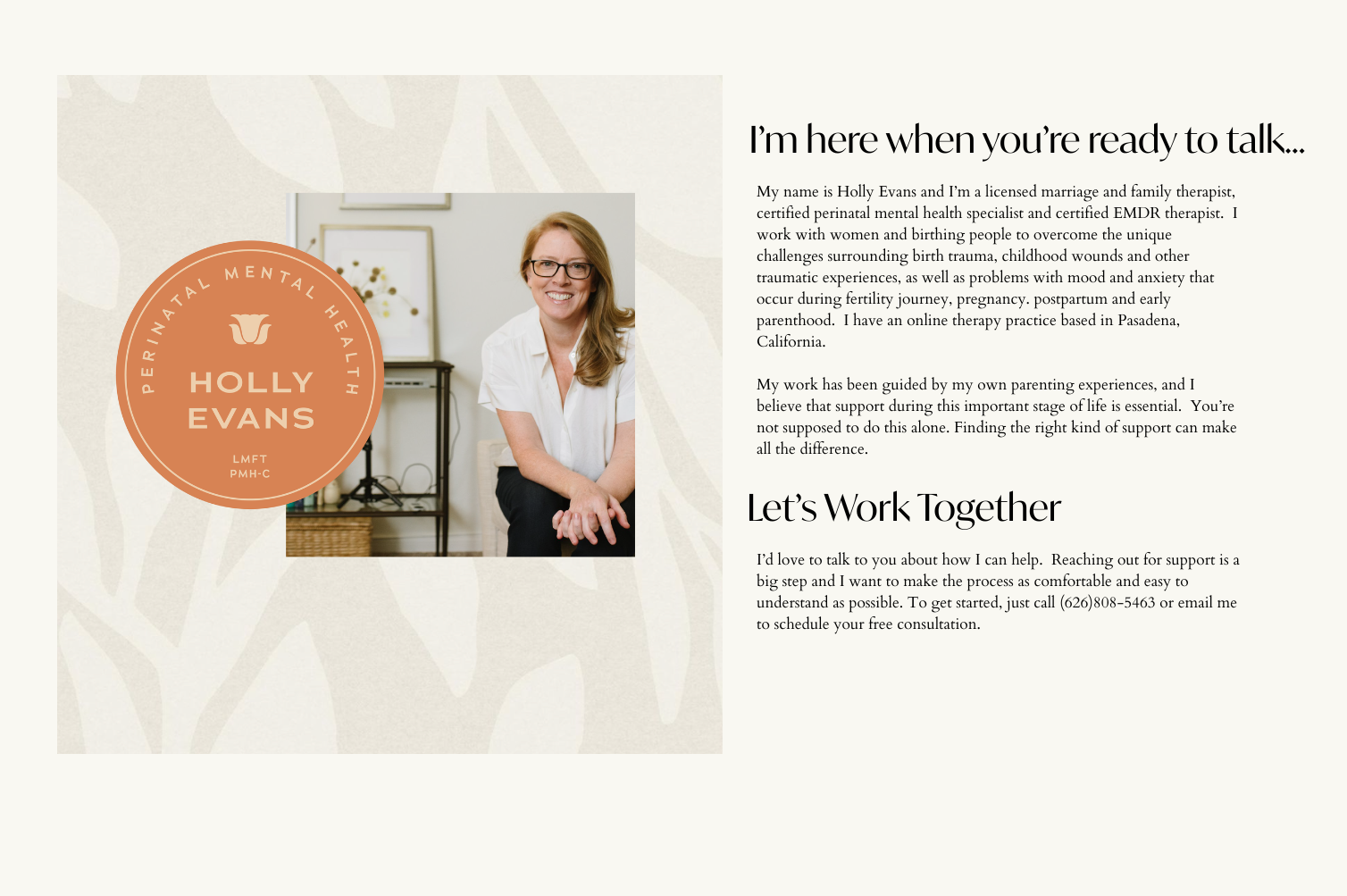
Online Birth Trauma Therapy in Los Angeles, California-Sessions are available to anyone living in California